
Case study · AI SaaS
Grubby AI
Front-end engineering for an AI writing platform with 750K users
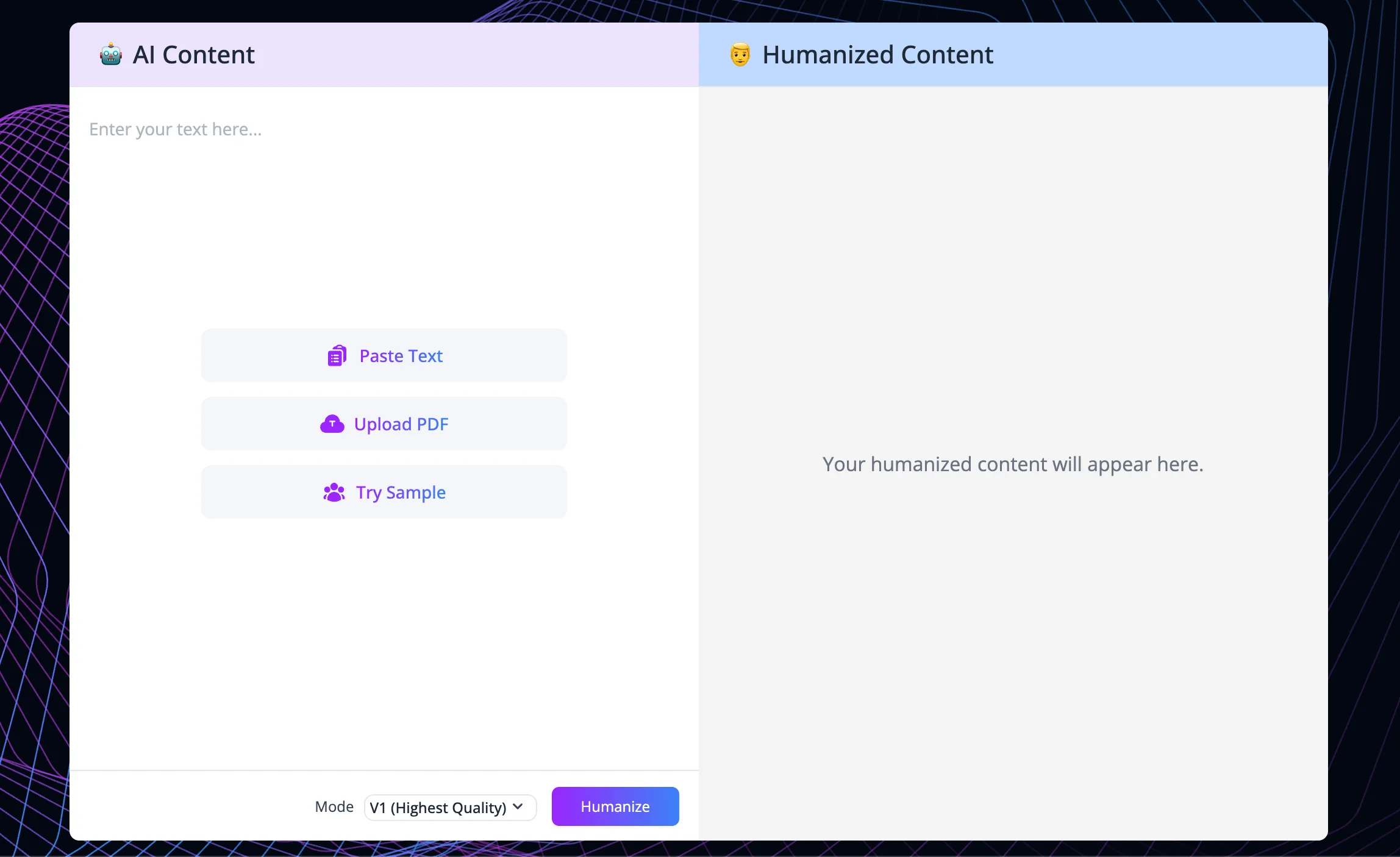
Since July 2024 I've led front-end engineering on Grubby AI's web app, iOS app, Chrome extension and MCP connector as it grew to 750K users.
- Client
- Grubby AI
- Role
- Lead front-end engineer
- Timeline
- Jul 2024 – present
- Engagement
- Ongoing partnership
- Live site
- grubby.ai ↗
The brief
Grubby AI is a writing platform that rewrites text so it reads naturally. Usage grew quickly, and the product had to add plans, languages and new places to use it while staying fast under heavier traffic.
I joined in July 2024 to lead the front end, and I've been on the project ever since, more than 1,650 hours of work so far.
What I built
Most of my work is the web app itself: the editor, the dashboard, and the account and billing pages, built in Next.js and TypeScript. I've written most of its front-end code, including subscriptions through Stripe and PayPal and the edge cases that billing always brings.
Around the web app, I built:
- Queues for the heavy rewriting jobs (Upstash and BullMQ), so a long job never blocks the interface and a traffic spike doesn't take the app down.
- An iOS app in Expo that shares the platform's accounts and subscriptions.
- A Chrome extension and an MCP connector, so people can use Grubby inside the tools they already work in, AI assistants included.
- Localization and an admin area for the team.
How it's built
The app runs on Next.js with Supabase for authentication and data, and models from OpenAI and Anthropic behind the rewriting features. Two decisions held up as usage grew. Long-running work moved out of request handlers and into queues. And the web app, iOS app, extension and connector all call the same APIs, so a new feature only has to be built once.
Results
Grubby has grown to 750K total users and 130K monthly active users, with $988K in revenue in its first year (figures reported by the client). I'm still on the project, shipping new tools and making the app faster.