
Case study · Menswear
Cypress Clothiers
A headless Shopify store for a multi-brand menswear shop
A custom Next.js storefront on Shopify for a Dallas shop that carries designer menswear labels, with filters by designer and private appointment booking.
- Client
- Cypress Clothiers
- Role
- Lead developer
- Timeline
- May 2024 – present
- Engagement
- New build
- Live site
- cypressclothiers.com ↗

The brief
Cypress Clothiers is a menswear shop in Dallas's West Village. It carries designer labels such as Another Aspect, Carter Young, ssstein and Yoko Sakamoto, and sells online as well as from the shop, where customers can book a private appointment. The site had to feel as considered as the clothes, which a standard theme couldn't manage, so the front end is custom and Shopify runs the catalog, stock and payments behind it.
I built the first version in 2024 and have worked on the store ever since. In June 2026 I shipped a full redesign of the storefront, and in September I added booking for private appointments.
What I built
- A Next.js storefront that reads products from Shopify's Storefront API. Each Shopify collection becomes a category tab, so a category the team adds in Shopify shows up in the shop with no code change.
- Filters for designer, size and price, plus sorting, all run on the server as Storefront API searches. Every designer gets a page of their own, and the product grid switches between two and four columns.
- Product pages with a full-screen gallery, size selection, a wishlist button and an "About the brand" panel for each label.
- A cart and a checkout step that take the shipping address and fetch live shipping rates from Shopify, then hand off to Shopify's checkout for payment.
- Customer accounts with sign-up by email code, a saved wishlist and order history. Orders come over from Shopify by webhook.
- Booking for private appointments through an embedded Calendly calendar, styled to match the site in light and dark mode.
- Automatic discounts shown as struck-through prices, and a maintenance mode that takes the store offline with one setting and tells search engines to check back later.
- cypressclothiers.com/shop
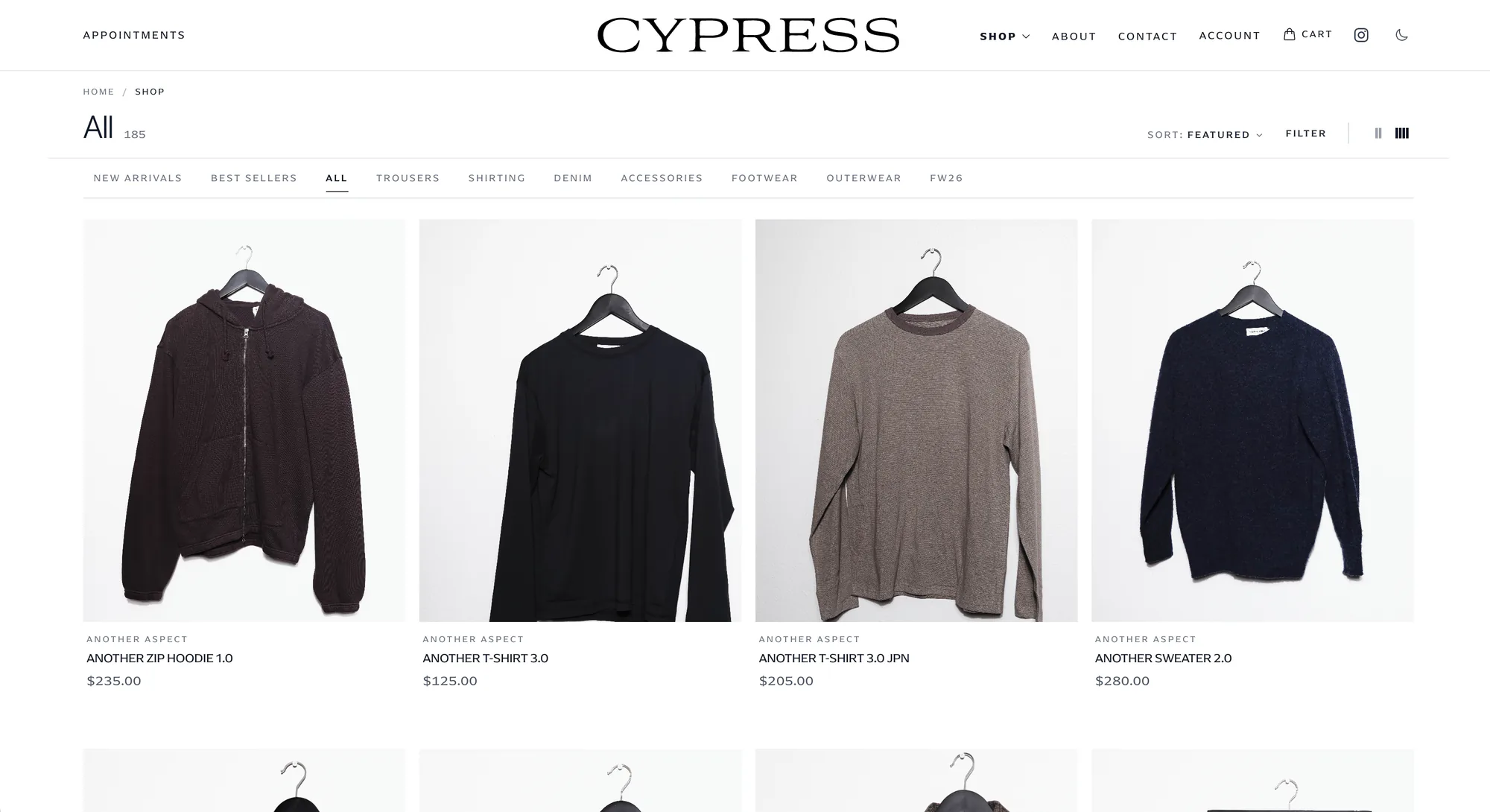
01 · Shop
- cypressclothiers.com
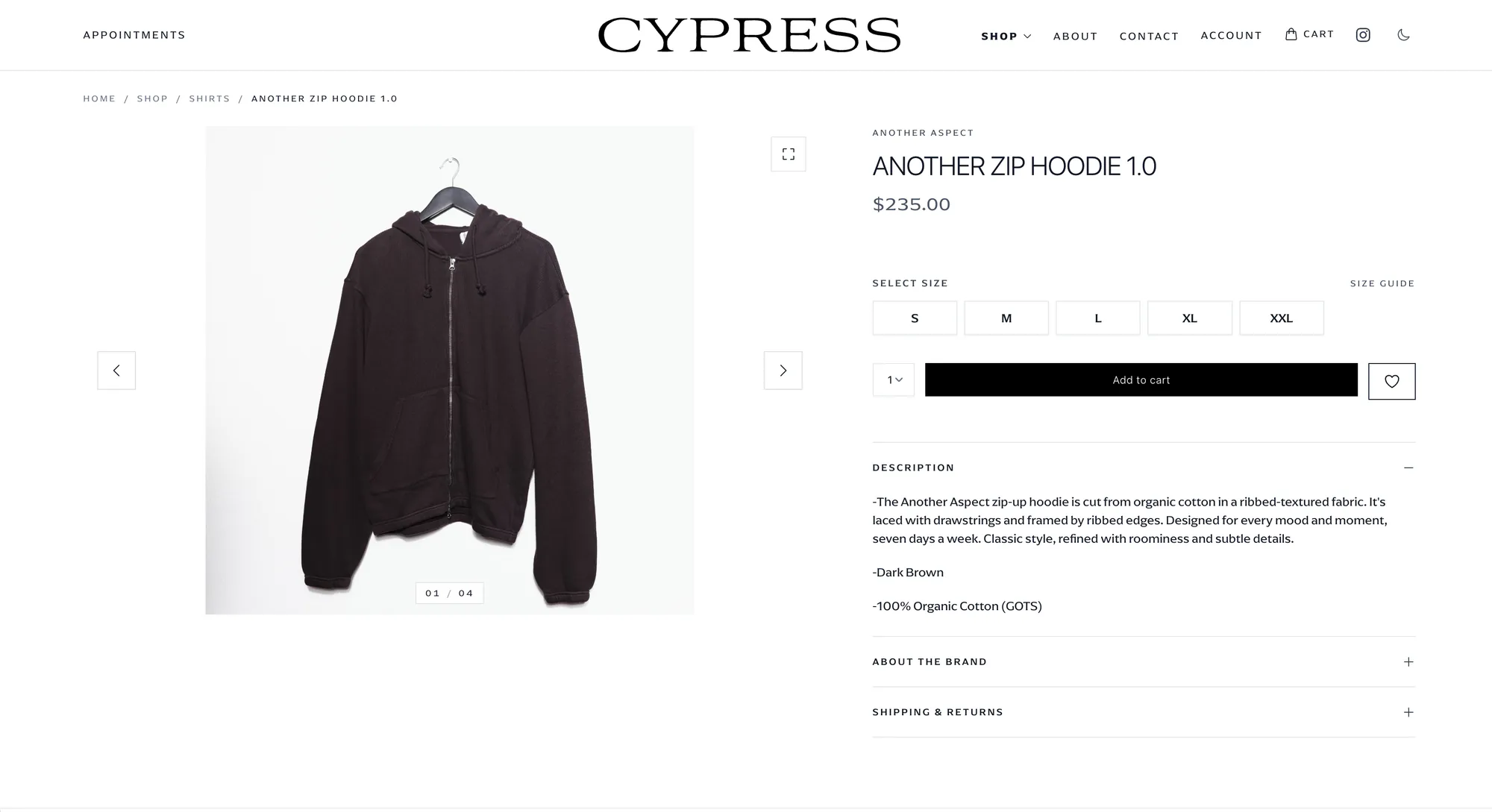
02 · Product page
How it's built
Shopify is the source of truth. Shop and product pages ask it for fresh data on every request, so a change in the Shopify admin shows up on the site straight away, and signed Shopify webhooks keep the sitemap current. Supabase holds the accounts, wishlists and copied orders.
Two Shopify details needed care. A cart is priced in the market it was created in, so every cart request pins the US market; without that, a shopper could see one price on a product page and a higher one in the cart. Shopify also sends shipping rates back as a deferred, multipart response, which the checkout step parses before it shows a total.
For search, every product is in the sitemap, product pages carry structured data with shipping and return details, and filtered views point search engines back to the unfiltered page.
Results
The store has run on this setup since 2024 and brings in about $5K a month (reported by the client). When the West Village shop opened in 2025, D Magazine put it on its list of the biggest Dallas store openings of the year. I still work on the store, adding features as the shop grows.