
Case study · Online marketplace
One Divine Source
Taking over a two-sided marketplace and keeping it shipping
In November 2025 I took over One Divine Source, a spiritual-guidance marketplace, from a previous agency, and have shipped new features every month since.
- Client
- One Divine Source
- Role
- Lead developer
- Timeline
- Nov 2025 – present
- Engagement
- Takeover
- Live site
- onedivinesource.com ↗
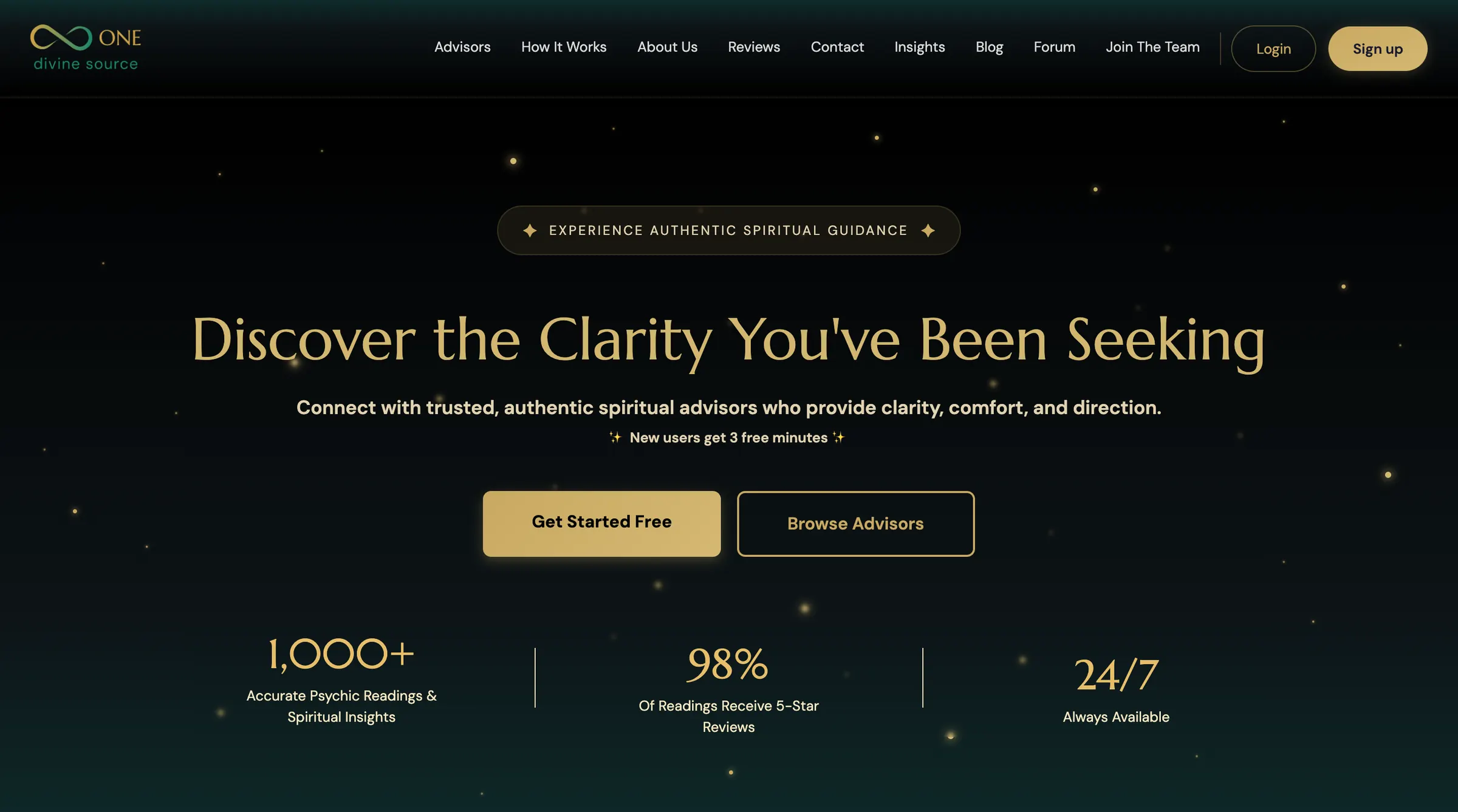
The brief
One Divine Source connects people with spiritual advisors for live readings, paid for with credits. When I took it over from the agency that built it, the platform was live and earning, so the job was to learn a large codebase quickly and keep shipping without breaking what already worked. Every change since then has been mine, close to 300 commits so far.
What I built
- Card payments through Stripe next to the PayPal checkout that was already there, and payouts to advisors through Stripe Connect.
- Intro offers with A/B tests, promo codes, tips, and a loyalty discount that grows with every 200 credits a customer buys, up to 25% off.
- A rebuilt live chat, with a session timer kept in Redis, offline messages, image sharing, moderation, missed-call handling and a filter that stops people swapping contact details to take sessions off the platform.
- The advisor side: applications with feedback when one is turned down, an agreement and onboarding flow, contracts, identity verification and public profiles.
- Bookings, a reviews page, a community forum, and a blog where edits to published posts wait for approval.
- An admin area that has grown from 8 pages to 27, with analytics dashboards, plus Builder.io so the team can build and edit pages without a developer.
- An upgrade from Next.js 14 to 16 and React 18 to 19, with Sentry for error tracking.
A free tarot reading
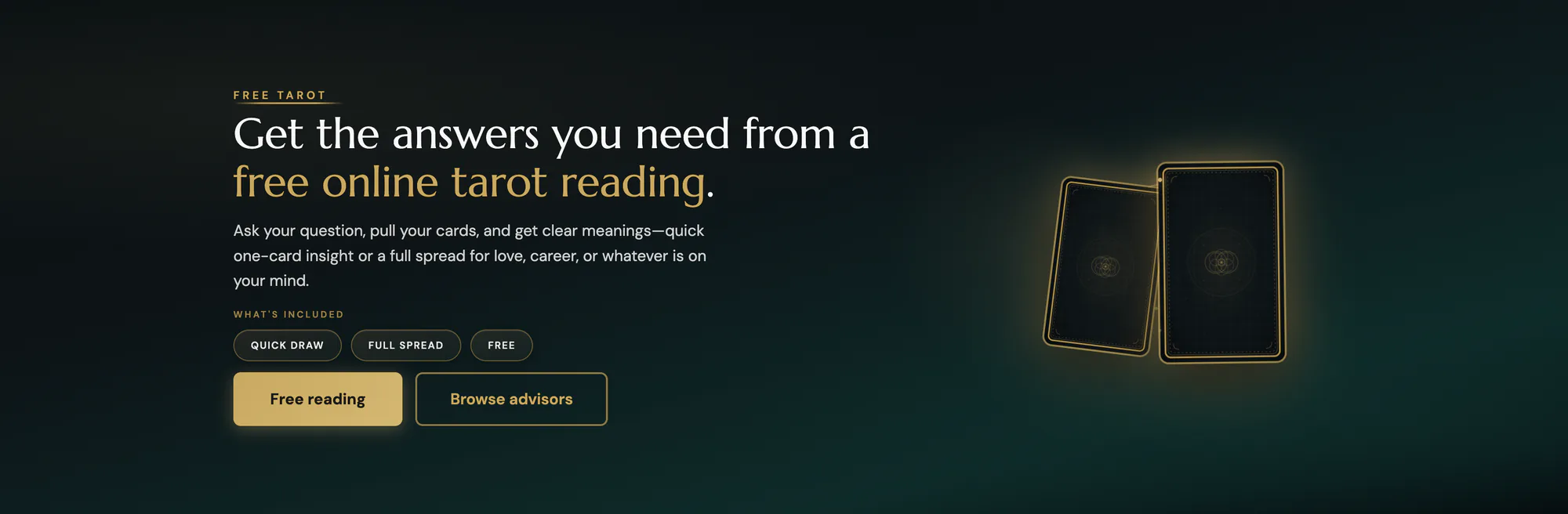
In spring 2026 I added a free tarot reading as a new way into the site. Anyone can use it without an account: ask a question, choose a spread and a deck, then pick cards from all 78, fanned across the screen. The cards turn over one at a time, and each gets its own written interpretation.
- onedivinesource.com/tarot
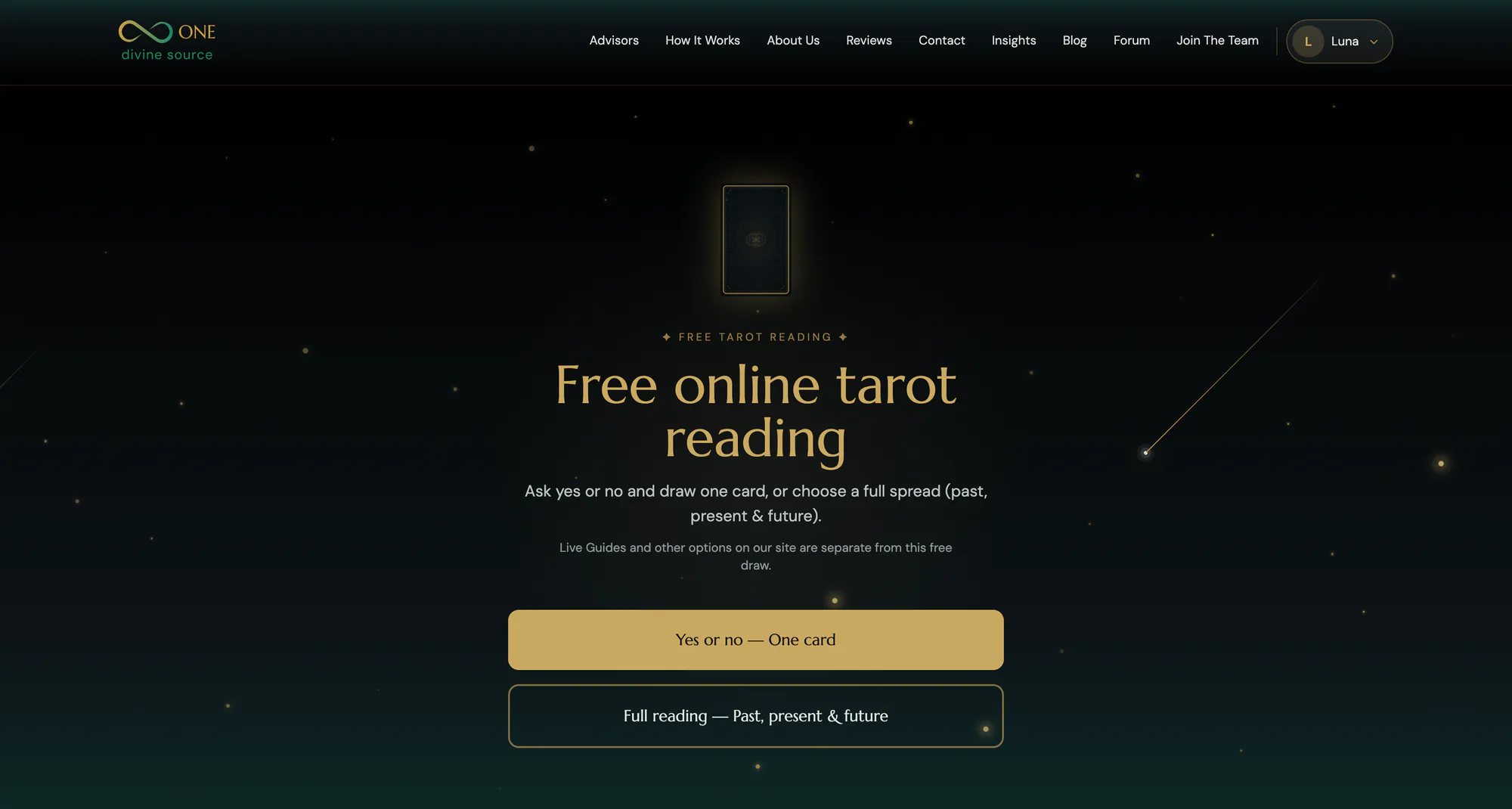
01 · Choose a reading
- onedivinesource.com/tarot
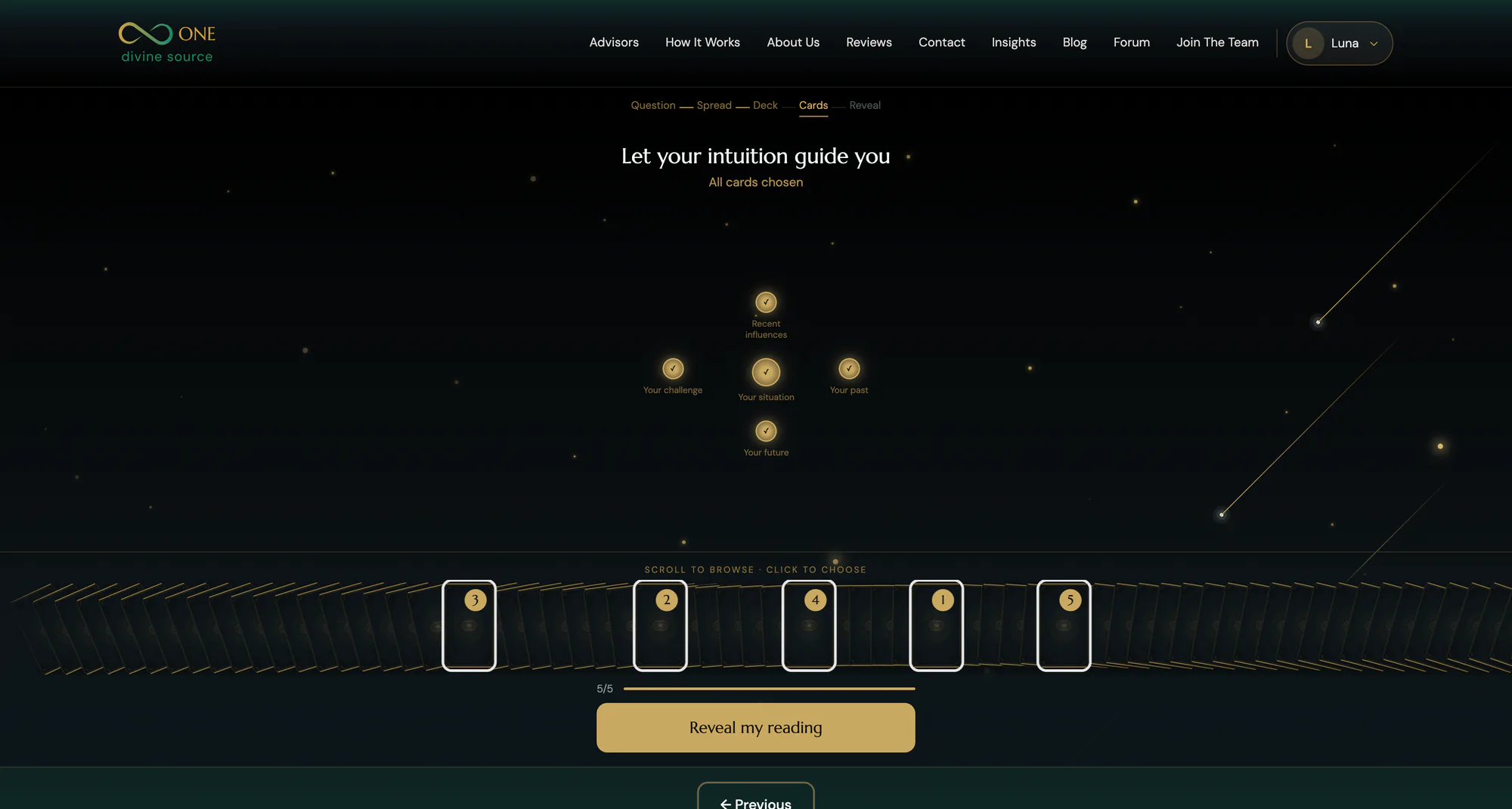
02 · Pick the cards
- onedivinesource.com/tarot
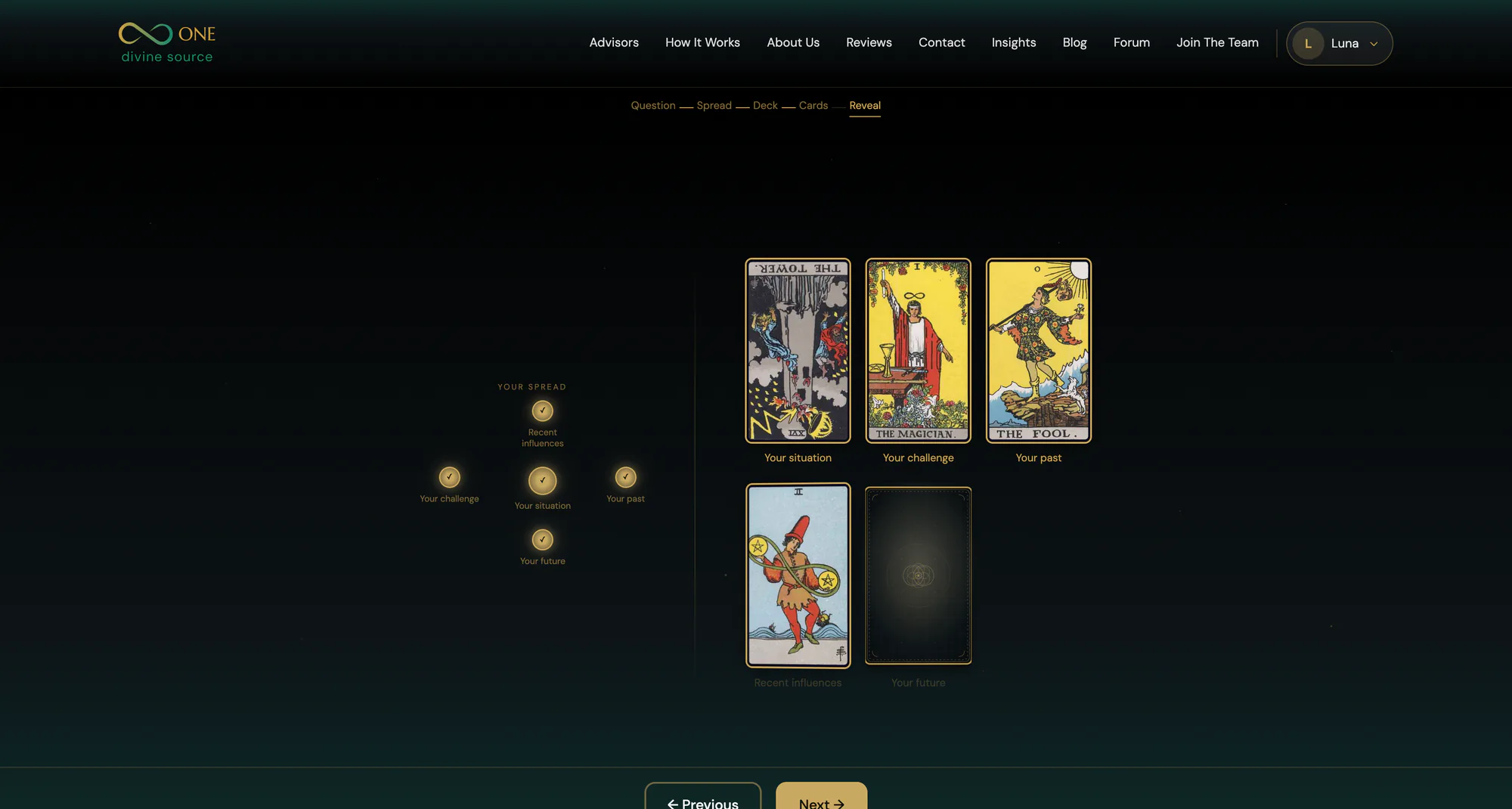
03 · Reveal
- onedivinesource.com/tarot
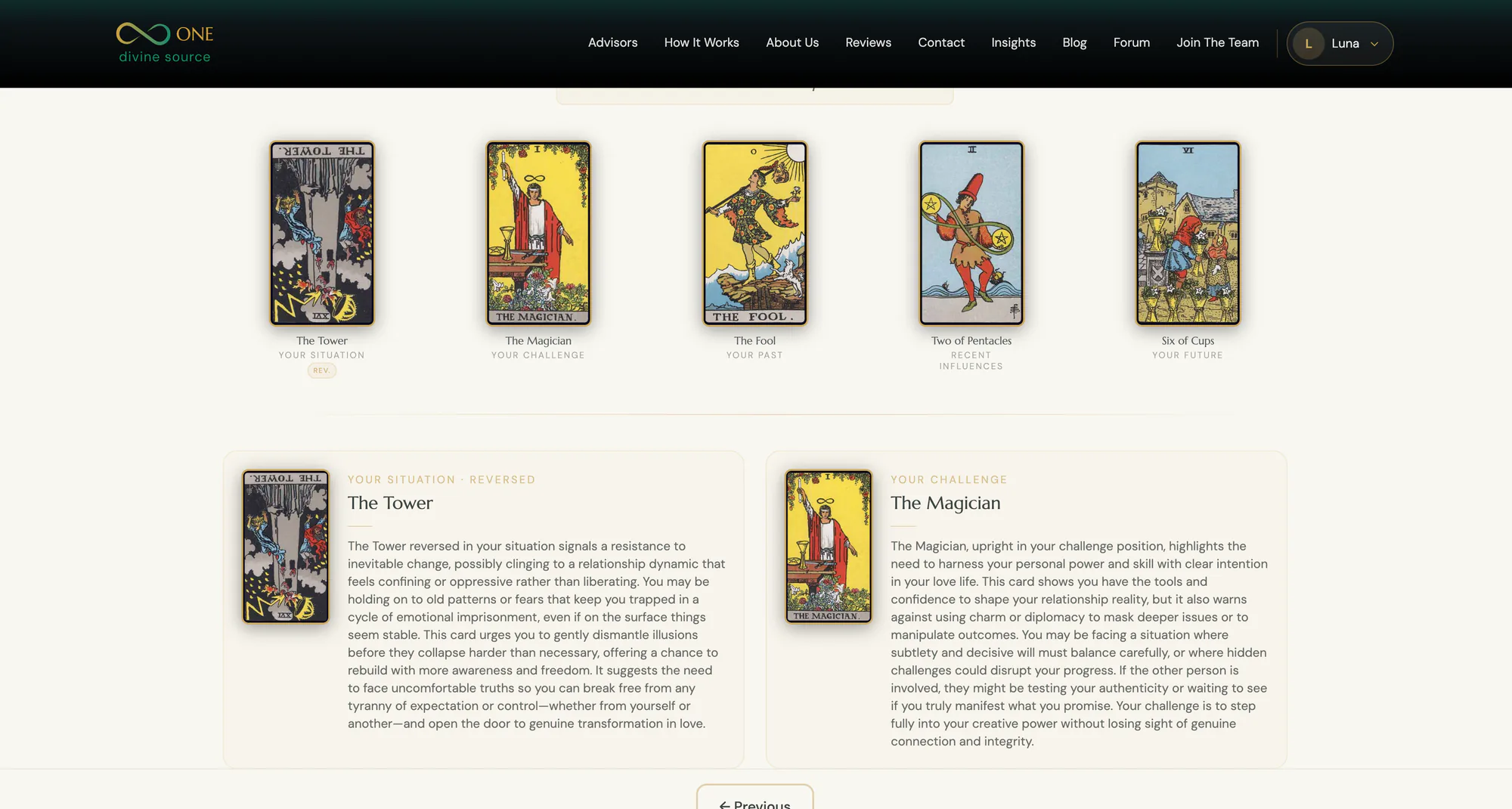
04 · Read
The interpretations come from OpenAI and stream onto the page as they're written, one stream per card plus one for the reading as a whole, all running at once. Each prompt carries the question, the card and whether it came up reversed, its place in the spread, Waite's traditional meaning and the other cards drawn, so a question about love gets an answer about love. The voice follows sample readings from the site's lead reader.
The reading is a Builder.io component, so the team can change the page around it without me. When a reading ends, a button leads to the advisors who read tarot, with whoever is online listed first. Signed-in users can also keep asking questions in a chat with an AI reader: the first reply is free, later replies cost a credit, and the credit is only taken when the reply actually answers the question and comes through in full.
On phones the fanned deck turns into a grid of cards to tap. The cards work from a keyboard, and the animations respect the reduced-motion setting.
Where it stands
The marketplace is live and I'm still its lead developer, shipping new features every month. Since I took over, the app has grown from 24 pages and 77 API routes to 84 pages and 240 routes.