
Service 03 / 04
AI integration for the product you already have
Writing tools, assistants, document generation and MCP connectors, built on OpenAI and Anthropic models and wired into your app so slow model calls never hold up the people using it.
In short
I add AI features to existing web apps and stores: writing and rewriting tools, assistants and support chatbots, document generation, and MCP connectors that let AI assistants use your product. They run on OpenAI or Anthropic models, with queues for long jobs so the app stays responsive. A first feature usually takes 2–4 weeks.
- Timeline
- 2–4 weeks
- Pricing
- Fixed price after a free estimate
- Where
- Daly City, CA · Remote across the US
- Stack
- OpenAIAnthropicQueuesSupabase
A good fit if
- Your product has users, and there’s one task AI could do for them faster: drafting, summarizing, rewriting or answering questions.
- Your support inbox fills up with the same questions, and a chatbot that knows your policies could answer most of them.
- You want AI assistants like Claude to work with your product through an MCP connector.
- An AI prototype works in a demo, and now it has to handle production traffic at a cost you can plan for.
Probably not a fit for
- AI added because it’s expected. If nobody can name the task it saves time on, the money is better spent elsewhere.
- Training your own model from scratch. I build on models from OpenAI and Anthropic, which cover what most product features need.
What I build
Writing tools, assistants, document generation and MCP connectors, built into the product you already have.
- 01
Writing and rewriting tools
Editors where the model drafts, rewrites or summarizes, and the person using it stays in control of the result.
- 02
Assistants and chatbots
Chat that answers from your own content, policies and product data, and hands the conversation to a person when it can’t help.
- 03
Background processing
Queues for long model calls, with retries and rate limits, so a slow response or a traffic spike doesn’t freeze the app.
- 04
MCP connectors
A Model Context Protocol server that lets assistants like Claude look things up and take actions in your product, with the user’s permission.
- 05
Limits and cost tracking
Usage limits per plan or per user, and a record of model usage, so you can see what each feature costs to run.
- 06
Document generation
Model output checked against a schema and turned into documents such as reports, proposals or invoices before anyone sees them.
How it runs
You approve a written scope and a fixed price before any work starts, then get a preview link every week.
Step 01
Pick the task
One job for the model to do, and examples from your own data of what a good and a bad result look like.
Step 02
Prototype
A working version on your data, comparing models for quality, speed and cost before anything goes into the product.
Step 03
Build it in
Queues, retries, limits and a screen for reviewing results, inside your app and on your accounts.
Step 04
Measure
After launch, usage, cost per task and the cases it gets wrong, tuned from there.
Work in this area
All case studies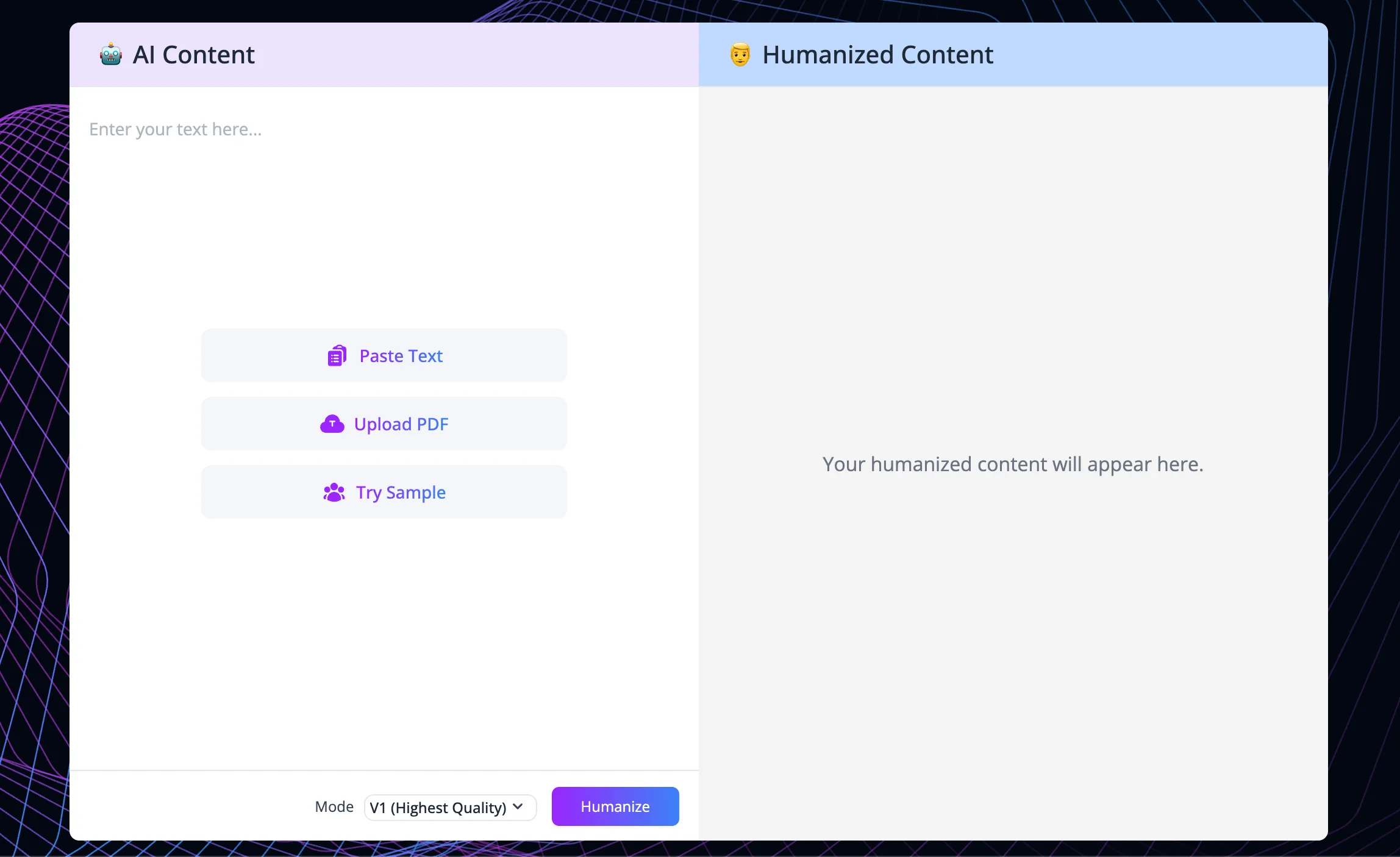
Fig. 02 · AI SaaS · Jul 2024 – present
Grubby AI
Front-end engineering for an AI writing platform with 750K users
750K total users
Case study
Fig. 03 · Handmade goods · Nov 2023
Coop De Lavender
A calmer, mobile-first store that grew sales 180%
+180% sales in four months
Case studyWe hired Nebula to build a chatbot for our website and they delivered beyond our expectations. The project was completed on time.
What affects the price
Every project gets a free estimate and a fixed price in writing before work starts. Typical timeline: 2–4 weeks.
- 01How clean and reachable your data is. Answers can only be as good as what the model is given.
- 02Whether people review the output before it’s used, and what that review screen needs to do.
- 03Volume: model calls are billed per use, so traffic shapes the running cost as well as the build.
- 04Connections to the tools the feature reads from or writes to.
Common questions
Something else on your mind? Email mail@bluenebula.dev.
Which AI models do you work with?
Mostly OpenAI’s GPT models and Anthropic’s Claude, chosen per task for quality, speed and cost. Grubby AI uses both.
Will AI features slow down my app?
Not if the slow work runs in the background. Long model calls go into a queue, so the interface stays responsive and a spike in traffic doesn’t take the app down. That’s how Grubby AI handles its rewriting jobs.
What is an MCP connector?
MCP (Model Context Protocol) is an open standard for connecting AI assistants such as Claude to other software. A connector for your product lets those assistants look things up or take actions in it on a user’s behalf. I built one for Grubby AI.
Can you add a chatbot to my Shopify store or website?
Yes. I built one for Coop De Lavender’s Shopify store that answers common customer questions. A chatbot works best when it answers from your actual policies and product details.
What will it cost to run?
Model usage is billed per request, so it depends on how often the feature runs and which model it calls. Part of the estimate is working out a realistic monthly running cost from the traffic you expect.
Start a project
Tell me what you’re building.
Email is the fastest way to reach me, and I usually reply within a day. Or use the form, and I’ll get back to you the same way.
37.69°N 122.47°W · Daly City, CA · Remote across the US