
Service 02 / 04
Shopify developer for custom and headless stores
Custom Liquid themes your team can edit, headless Next.js storefronts on Shopify’s checkout, and moves from WordPress or WooCommerce planned around the search traffic you’ve already earned.
In short
I build Shopify stores in two ways: custom Liquid themes that your team edits in the Shopify admin, and headless storefronts with a Next.js front end on Shopify’s catalog and checkout. I also move stores from WordPress to Shopify with redirects for every old URL. Most builds take 3–6 weeks at a fixed price.
- Timeline
- 3–6 weeks
- Pricing
- Fixed price after a free estimate
- Where
- Daly City, CA · Remote across the US
- Stack
- ShopifyLiquidNext.jsStorefront API
A good fit if
- Your brand lives in its photography and design, and a stock theme makes the store look like everyone else’s.
- You’re moving from WordPress, WooCommerce or another platform and can’t afford to lose the search traffic you’ve built.
- Most of your customers shop on their phones, and the mobile store is where sales get lost.
- You want an editorial, content-heavy store, or an experience a theme can’t do, and a headless build makes sense.
Probably not a fit for
- A store that has to open this week. A good paid theme, set up carefully, will get you there faster and for less.
- Going headless because it sounds faster. If a custom theme can do what you need, it costs less to build and to run, and that’s what I’ll recommend.
What I build
Custom Liquid themes and headless Next.js storefronts, plus migrations to Shopify that keep your search rankings.
- 01
Custom themes
A Liquid theme designed around your products, built from sections your team can add, reorder and edit in the theme editor.
- 02
Headless storefronts
A Next.js front end that reads products from the Storefront API and hands off to Shopify’s checkout, so payments stay on a platform shoppers already trust.
- 03
Migrations
Products, pages and content moved from WordPress or WooCommerce, with every old URL redirected to its new page.
- 04
Mobile-first product pages
Product pages, cart and checkout path designed for a phone first, since that’s where most shoppers are.
- 05
Motion and editorial pages
Animation and layered layouts that set the pace of the store, kept off the critical path so the first view still loads fast.
- 06
Accounts, booking and the rest
Customer accounts, appointment booking, discount pricing and the other features a brand outgrows its theme for.
How it runs
You approve a written scope and a fixed price before any work starts, then get a preview link every week.
Step 01
Scope
A call to choose between a custom theme and a headless build, then a written list of templates and integrations with a fixed price.
Step 02
Design
Designs for the pages that sell: home, collection, product and cart. You review them before I build.
Step 03
Build
A preview store you can click through every week. On migrations, products and redirects are tested on the preview before launch.
Step 04
Launch & grow
Launch, then new collections, campaigns and features as the brand grows. Veranasi and Cypress Clothiers still work with me.
Work in this area
All case studies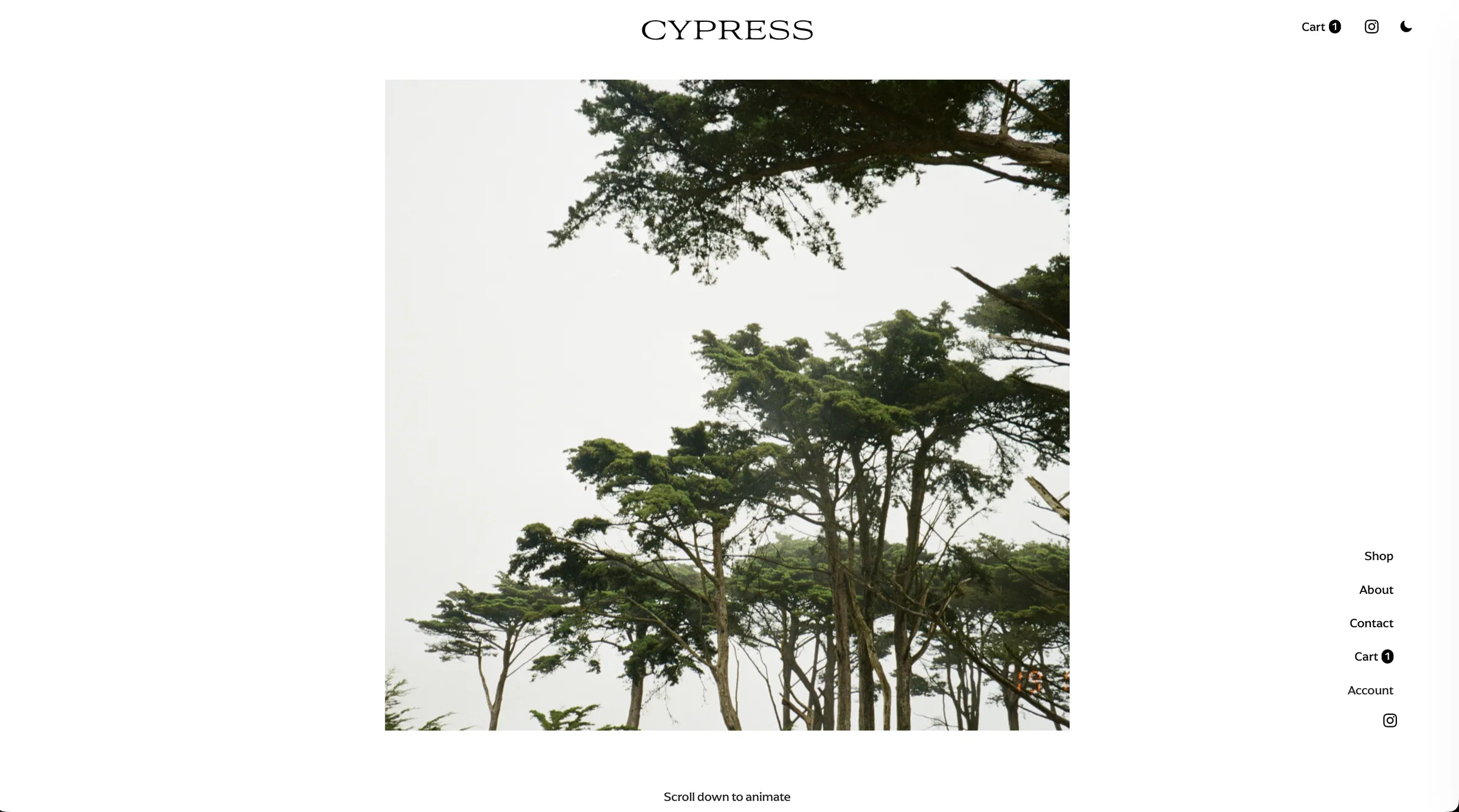
Fig. 02 · Menswear · May 2024 – present
Cypress Clothiers
A headless Shopify store with an editorial front end
$5K monthly revenue
Case study
Fig. 03 · Jewelry · Oct 2024 – present
Veranasi
Moving a jewelry brand from WordPress to Shopify without losing the polish
$10K+ revenue in the first month
Case study
Fig. 04 · Handmade goods · Nov 2023
Coop De Lavender
A calmer, mobile-first store that grew sales 180%
+180% sales in four months
Case studyWhat affects the price
Every project gets a free estimate and a fixed price in writing before work starts. Typical timeline: 3–6 weeks.
- 01Theme or headless: a custom theme is less work to build and to maintain.
- 02How many page templates and custom sections the design calls for.
- 03The size of a migration: how many products, pages and old URLs have to come across.
- 04Custom features such as accounts, booking, or connections to your other tools.
Common questions
Something else on your mind? Email mail@bluenebula.dev.
Should my store be on Shopify or headless?
Most stores do best on a custom Shopify theme: it’s faster to build, cheaper to run and easy for your team to manage. Headless, with a custom Next.js front end on Shopify, makes sense when you need an experience a theme can’t do or a lot of editorial content. Cypress Clothiers is headless; Veranasi and Coop De Lavender run on Liquid themes.
Can you move my store to Shopify without losing search rankings?
That’s what every migration I plan is built around. Each old URL gets a redirect to its new page, titles and descriptions come across with the content, and the redirects are tested before launch. Veranasi moved from WordPress to Shopify this way.
Will my team be able to edit the store?
Yes. Custom themes are built from sections your team can add, reorder and edit in Shopify’s theme editor. On a headless store, products, collections and prices are still managed in the Shopify admin.
How long does a Shopify build take?
Usually 3–6 weeks. Large catalogs and complicated migrations take longer, and the estimate will say so up front.
Do you work on existing Shopify stores?
Yes. Coop De Lavender was a redesign of a live store, and I add features to running stores as a project or on a monthly retainer.
Start a project
Tell me what you’re building.
Email is the fastest way to reach me, and I usually reply within a day. Or use the form, and I’ll get back to you the same way.
37.69°N 122.47°W · Daly City, CA · Remote across the US